The Morning-After Question
Last week, a compliance automation startup was accused of generating nearly 500 fake SOC 2 reports. If you missed it, we wrote about the red flags and what real compliance looks like.
But there's a follow-up question that's harder to answer: what happens to the companies that were using those reports?
If you relied on a compliance platform that cut corners, or if you're now looking at your SOC 2 report with fresh skepticism, here's what you're actually dealing with and what to do about it.
The Uncomfortable Reality
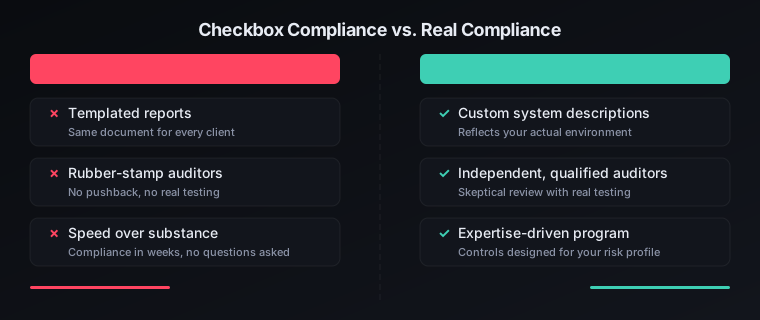
A SOC 2 report is supposed to be an independent auditor's professional opinion that your security controls are designed properly and operating effectively. If that opinion was templated, if the auditor didn't actually test your controls, if the system description doesn't reflect your environment, then the report isn't just weak. It's meaningless.
And that creates real problems.
Here's the thing worth saying out loud, though: some of the companies caught up in this may have genuinely mature security programs. They may have built real controls, trained their teams, and taken security seriously long before they ever engaged a compliance platform. Their actual security posture might be excellent. But now their compliance report is under a cloud, and they're guilty by association with a vendor they trusted.
That's a different problem than having no program at all, and it deserves a different response.
Your Customers Relied on That Report
Enterprise buyers request SOC 2 reports during procurement because they need assurance that your security practices meet a certain standard. If your report was fabricated, you've been representing a security posture to your customers that may not exist. That's not just a compliance gap. It's a trust problem.
The moment a customer finds out your report wasn't legitimate, every contract that required compliance attestation is potentially in question.
Your Contracts May Require Valid Compliance
Many enterprise contracts include clauses requiring vendors to maintain specific compliance certifications. If your SOC 2 report is found to be invalid, you could be in breach of contract. Some agreements include termination rights or financial penalties tied to compliance status.
Read your contracts. If they reference SOC 2 compliance as a condition, and your report turns out to be worthless, you have a contractual exposure that needs to be addressed proactively.
Regulatory Exposure Is Real
If your company handles protected health information and your HIPAA compliance was part of the same platform that produced fake SOC 2 reports, the risk escalates significantly. The Office for Civil Rights doesn't distinguish between "we didn't know our compliance was fake" and deliberate noncompliance when patient data is involved.
For companies with EU customers, GDPR compliance documentation that was fabricated rather than earned exposes you to fines of up to 4% of global annual revenue. More critically, it means the underlying data protection controls that GDPR requires may not actually be in place.
Your Actual Security Posture Is Unknown
This is the part that matters most. A fake compliance report doesn't just mean you lack a valid document. It means nobody has actually verified whether your security controls work. You might be fine. You might have significant gaps. The point is you don't know, and not knowing is the most dangerous position to be in.
How to Assess Where You Stand
If you have any doubt about the integrity of your compliance program, here's how to get clarity.
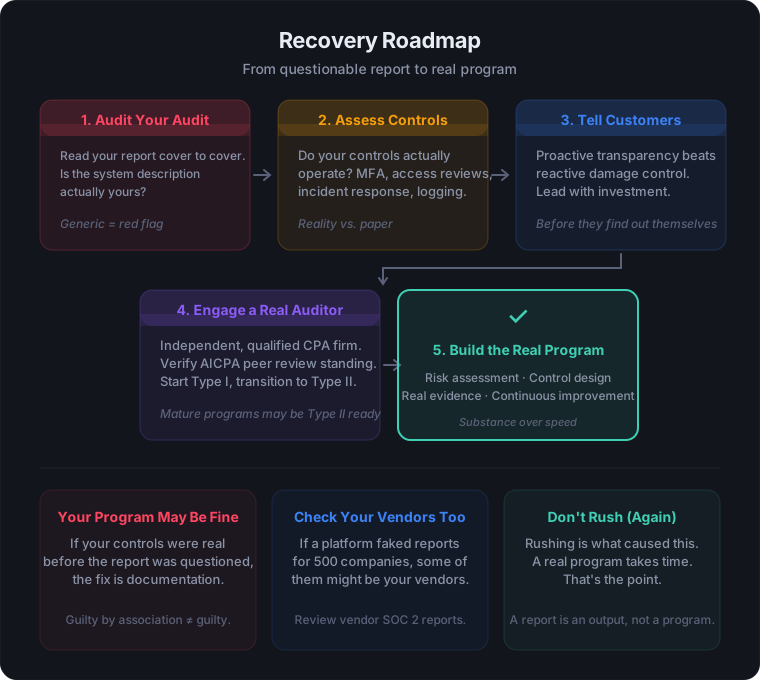
Step 1: Audit Your Audit
Pull out your SOC 2 report and answer these questions honestly:
- Does the system description accurately reflect your infrastructure, or is it generic enough to apply to any company?
- Are the control descriptions specific to your environment, or do they read like templates?
- Did your auditor interview your team, or was the entire process handled through a platform?
- Can you find your audit firm in the AICPA's peer review database? Do they have a verifiable physical presence? (You can search the AICPA public file database here.)
- Were any controls marked as "not applicable" or "untestable" without a clear explanation?
If you're answering "I don't know" to several of these, that's your answer.
Step 2: Assess Your Actual Controls
Separate from the report itself, evaluate whether your security controls are actually operating. This means looking at:
- Are access reviews happening? Is MFA enforced? Are terminated employees deprovisioned promptly?
- Do code changes go through review before deployment? Is there a documented change management process?
- Do you have a tested incident response plan, or just a document nobody has read?
- Are you monitoring your infrastructure for security events? Would you know if something went wrong?
- Have you evaluated the security posture of your critical vendors?
The goal isn't perfection. The goal is understanding where you actually are versus where your report says you are.
Step 3: Talk to Your Customers (Before They Talk to You)
If you discover your compliance program has gaps, the worst thing you can do is wait for a customer to find out on their own. Proactive transparency builds trust. Reactive damage control destroys it.
You don't need to lead with "our SOC 2 was fake." You can lead with "we're investing in strengthening our compliance program and wanted to give you an update on what we're doing." Frame it as a proactive improvement, because that's what it is.
Step 4: Engage a Legitimate Auditor
If your previous audit wasn't real, you need a real one. This means engaging an independent, qualified CPA firm with actual SOC 2 experience. We've written a detailed guide on how to choose a SOC 2 auditor that covers what to look for and what to avoid.
A few things to keep in mind:
- Timeline: A legitimate Type II audit requires an observation period (typically 3 to 12 months). If you're starting from scratch, you can begin with a Type I (point-in-time) to establish a baseline, then transition to Type II. But if your security program was already mature and your controls have been operating effectively, you may be closer to Type II ready than you think. The report was the problem, not necessarily your program.
- Readiness assessment: Before engaging an auditor, consider a readiness assessment to identify and remediate gaps. Going into an audit with known issues wastes time and money.
- Don't rush it: The instinct will be to get a new report as fast as possible. Resist that instinct. Rushing is what got you into this situation. Do it right this time.
We're already seeing this play out. Companies like Wispr Flow have publicly moved to established firms like Aprio, a top-25 US accounting firm, for fresh independent audits. Aprio is one of the firms we work closely with, and they're fielding a significant volume of calls from companies looking for legitimate auditors right now. That's a good sign. It means companies are taking this seriously and doing the work to make it right.
Step 5: Build the Program Behind the Report
A SOC 2 report is an output of a compliance program, not the program itself. If your previous approach was "platform handles everything," you need to rethink that model.
A real compliance program includes:
- A risk assessment that reflects your specific threats and vulnerabilities, not a generic checklist
- Controls tailored to your architecture, your team, and your risk profile
- Real evidence of controls operating over time, not auto-generated artifacts
- Regular review and update of your security practices as your company grows
We've covered the full process in our guide on building a security compliance program from scratch.
What About Your Vendors?
Here's an angle that's easy to overlook: if a compliance automation startup was producing fake reports for hundreds of companies, some of those companies might be your vendors.
Your vendor risk management program should include reviewing your critical vendors' SOC 2 reports. If any of your vendors used the same platform, their compliance status is also in question. This is a good time to:
- Review which vendors provided SOC 2 reports as part of your vendor assessment
- Evaluate whether those reports show the same red flags (generic descriptions, unfamiliar auditors, identical language)
- Request updated compliance information from vendors where you have concerns
The Silver Lining
If you're reading this and feeling anxious, here's the upside: now you know. Companies that never question their compliance program continue operating under false assumptions. Companies that confront the reality and fix it come out stronger.
And if you're one of the companies that actually had a strong security program and just got burned by a vendor you trusted, the path forward is shorter than you think. Your controls are real. Your practices are sound. You just need a legitimate report to prove it. That's a documentation problem, not a security problem, and it's very solvable.
A legitimate compliance program isn't just about having a document to share during procurement. It's about actually protecting your customers' data, your company's reputation, and your ability to operate. The companies that treat this as a wake-up call rather than a crisis will be better positioned than they were before.
The Bigger Picture
This situation is going to accelerate changes in how the industry approaches compliance verification. Expect to see:
- More scrutiny of compliance automation platforms, with customers and investors asking harder questions about how they actually work
- Increased demand for auditor transparency, with companies verifying their auditors independently rather than through a platform
- Potential regulatory oversight if regulators determine that companies were misled at scale
- Higher standards for vendor risk, with enterprise buyers looking more carefully at the quality of compliance reports rather than just whether one exists
The era of checkbox compliance is ending. That's a good thing.
How Concerto Can Help
If you're reassessing your compliance program, whether because of this situation or because you've been meaning to for a while, we can help you figure out where you stand and build a path forward. From readiness assessments to full program builds to audit preparation, our focus is always on substance over speed. Let's talk.